Skip to content
For teams · Workshops, keynotes & conference talks

Your team is fine.
Perhaps that's the problem.

Or the opportunity. Three workshops for teams in the middle of change, and teams that have quietly stopped believing it will matter.

15 minutes · no pitch · you'll leave knowing whether it's the right room.

Chloe Cooper, seated, mid-thought
Trusted by professionals at
Reckitt
Unilever
Mars
Coles Group
IGD
Rainbow Designs
The picture

They're performing. So it goes under the radar.

50%+of employees in large organisations are disengaged
1 in 10are planning to leave
17%are actually flourishingthe rest are fine

Most have at least partly stopped fighting for more. Going through the motions, doing what needs to be done. Here's the spanner: they're performing, so disengagement goes under the radar. They're nowhere near a performance rating, yet they've stopped believing that speaking up changes anything.

And it's contagious. When one person gives up or pulls back, the team often follows.

In times of change, teams fall like dominoes.

Three workshops · One method

Pick the one that sounds like your team right now.

Sustainable performance · Wellbeing · Culture
01
The Fulfilment Habit
Sustainable performance in two minutes a week.

For high-performing teams who are “fine”. Nine areas of life and work, three pillars, one number — and the two-minute habit that showed career and finances rising when people loosened their grip.

Sounds like: “We hit the number and had nothing left.” · “The wellbeing app has 6% utilisation.” · “We didn't see that resignation coming.”
How it works ↓
Change · Ownership · Engagement
02
The Owner Mindset
Leading yourself — and your team — through change.

For teams where the org chart moved but the people didn't. A map of the four responses to any situation — Prisoner, Endurer, Escaper, Owner — and a way back to the one that works.

Sounds like: “We've lost the middle.” · “People are waiting to be told.” · “Nobody's failing, nobody's pushing back either.”
How it works ↓
Leadership · Change · Responsibility
03
Leading Through Change
Leadership is a choice, not a title.

Change lands on everyone. What separates the people who come through it well is that they take responsibility for the outcome they want, rather than waiting for it to be handed to them. Built on the Change Pyramid: from awareness and belief to radical self-responsibility, conscious prioritisation and meaningful action.

Sounds like: “People are waiting for permission.” · “Someone should sort that.” · “We've told them the why, they're still not moving.” · “I need managers who lead this, not just manage it.”
How it works ↓

Not sure? Most teams start with whichever names their problem.

The method

Three workshops. One method.

How change actually happens in a team, from the bottom up.

Most teams stall on the bottom two layers. They can't see the pattern, or they don't believe it can change. Each workshop stands alone and works on one layer. Together they're the whole pyramid.

Start anywhere

Choose your own adventure.

30 MIN
Conference talk

“Fine is the most dangerous word in the English language.” A talk that makes a room of high performers go quiet, then reach for a pen.

60 MIN
Keynote or lunch & learn

Any size. The framework, the story, the data, and the two-minute habit. Ideal for kick-offs, town halls and wellbeing weeks.

2 HR
Workshop

Up to ~25 people. Interactive, applied to real situations, ends with one move per person. Optional pre-session Snapshot.

8 WK
The journey

All three workshops with the free 30-day Challenge between them, run on your team's own data. About eight weeks.

Virtual · In person · Blended
In detail

How each one works.

01The Fulfilment HabitSustainable performance · Wellbeing · Culture

Fine is the most dangerous word in your engagement survey.

Your best people aren't failing. They're busy but bored, delivering and dimming. Fine is survivable — that's the problem. There's never quite enough pain to force a change, so the drift goes unnoticed until it shows up as the resignation you didn't see coming. This workshop replaces “work-life balance” with three pillars and nine areas, and starts a two-minute weekly habit in the room.

What participants experience
  • Take the Fulfilment Snapshot — nine areas, three pillars, one number. Scores stay private; the language is shared.
  • Spot the pattern. Most driven people are heavily invested in Me, possibly We, almost certainly not Be.
  • See the data: what happened when 37 busy professionals tracked for two minutes a week.
  • Choose two areas to prioritise, and start the free 30-day Challenge before they leave the room.
  • Team conversation: where has our collective focus been going, and what does that explain?
What the organisation gets
  • A habit people keep — two minutes, once a week — and a framework that holds.
  • Leaders see which pillar the team has neglected, without anyone disclosing a score.
  • Performance that lasts past Q1: in the Pioneer study, Me rose when people invested in Be.
  • Thirty days later: a before-and-after you can put in front of the board.
Best fit
Offsites & kick-offsWellbeing & engagement programmesLeadership teamsLunch & learn seriesBook-bundled team events
Chloe Cooper, relaxed, full length
We
  • Romantic relationships
  • Personal relationships
  • Contribution
Me
  • Career
  • Personal finances
  • Personal growth
Be
  • Mind
  • Body
  • Spirit
02The Owner MindsetChange · Ownership · Engagement

Accurate doesn't equal agency.

This workshop works on the two beliefs that decide whether people own a change or endure it: agency (can I influence this?) and optimism (will it get better?). When either is low, people get stuck. Participants map themselves honestly, pick one live situation, and leave with one ownership move for the week.

What participants experience
  • Map themselves onto the Owner Mindset 2×2. Applied to the self — never used to assess anyone.
  • See each response from the inside, including the escape that looks like initiative.
  • Draw a line in the sand on one real situation and find the belief keeping them stuck.
  • Make one ownership move: something to ask, choose, stop, start, protect or change this week.
  • Leader layer (optional): how low optimism spreads through a team, and what a leader can do about it.
What the organisation gets
  • A shared language for change people use in one-to-ones the same week.
  • Managers who own problems rather than escalate them.
  • The honest conversations your engagement survey is hinting at.
  • An optional before-and-after pulse on agency and optimism you can show upward.
Best fit
Change programmesLeadership offsitesNew & mid-level managersPost-restructure teamsEngagement survey response
Chloe Cooper, seated, direct to camera
Optimism →Agency →
EscaperHigh optimism, low agency. Things could be better — just not here, not by me.
OwnerHigh agency, high optimism. It can improve, and I can play a part.
PrisonerLow agency, low optimism. Stuck, and unlikely to change.
EndurerHigh agency, low optimism. I could act, but it won't matter. So I armour up.
03Leading Through ChangeLeadership · Change · Responsibility

Leadership is a choice, not a title.

Change lands on everyone. What separates the people who come through it well is that they take responsibility for the outcome they want, rather than waiting for it to be handed to them. Built on the Change Pyramid: from awareness and belief to radical self-responsibility, conscious prioritisation and meaningful action.

What participants experience
  • Locate their team on the Change Pyramid and name the layer it's stuck on.
  • Use the belief-rewiring tool on one belief that's holding the team back.
  • Practise asking clearly for what they need.
  • Turn “someone should” into “I will”.
  • Leave with one committed move.
What the organisation gets
  • Managers who lead the change rather than administer it.
  • Fewer decisions escalated upward.
  • A team that asks for what it needs instead of waiting.
  • A tool people keep using after the room.
Best fit
Change programmesNew and mid-level managersLeadership team offsitesPost-restructure teamsChange champions networks
Included

What every participant leaves with.

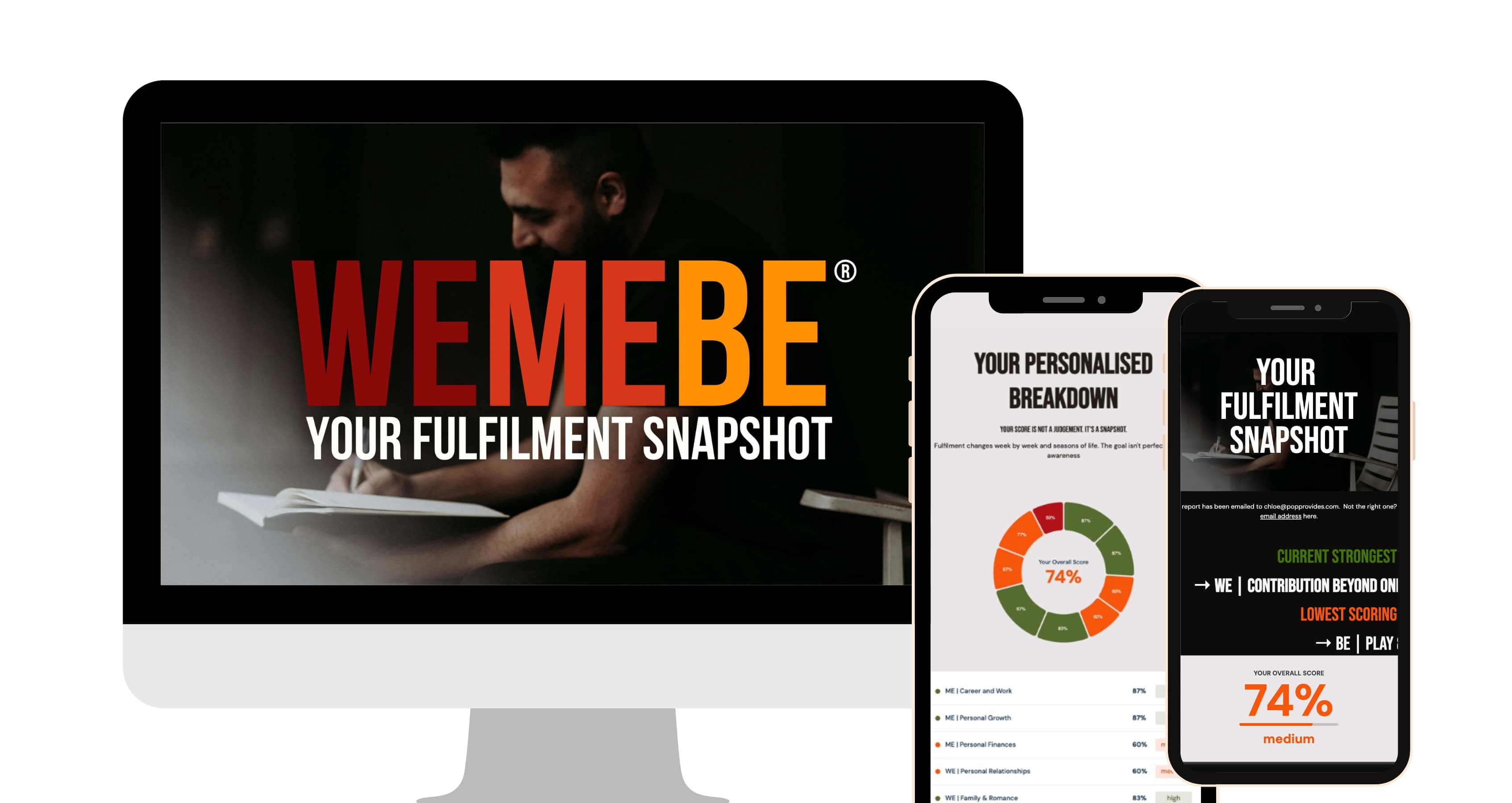
The Fulfilment Snapshot

The Fulfilment Snapshot

Nine areas, three pillars, one number. Two minutes, private, and theirs to keep.

Complimentary for every participant
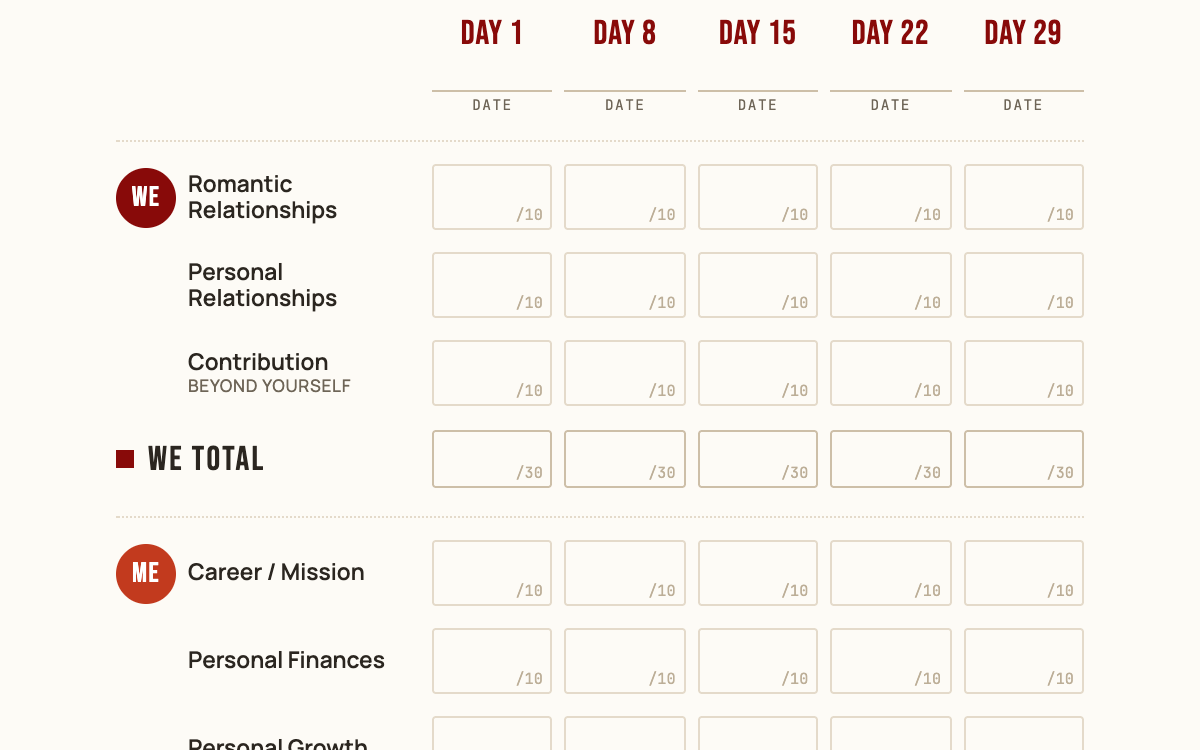
The 30-day Challenge tracker

The 30-day Challenge

Five check-ins, two minutes each. Thirty days later, a before-and-after they can read themselves.

Complimentary for every participant
The Fulfilment Habit by Chloe Cooper

The book

The Fulfilment Habit. First two parts free for every participant; the full book bundled on request.

Complimentary for every participant

Want the detail? It's all in the guide.

The proof

Thirty-seven people. Two minutes a week.

The more they checked in, the more it moved. Same people, measured against themselves.

2+ check-ins+7.3%All 37 Pioneers · all nine areas improved
5+ check-ins+8.4%29 people
8+ check-ins+13.1%11 people

11 of the 37 finished lower than they started. That is in the book too — a number you can trust beats a number that flatters. See the full case study →

“After a number of previous motivational speakers, the team said Chloe was more relevant, connectable and resonated more with them. She delivered a 1.5-hour virtual session from the UK to my team in Australia — it was like she was in the room.”

Elaine Brooks, Head of Product Development & Innovation — Coles Group

“What Chloe has helped us achieve can't be underestimated. This couldn't have been achieved by anyone internally. We can already see a change in our business for the better and colleagues are referring to the sessions regularly.”

Alys Dawson, Director of Product, Creative & Marketing Services — Rainbow Designs
Book a Power 15

Book a Power 15.

Fifteen minutes. Tell me what's changing and where your team honestly is. I'll tell you which workshop fits, which format, and whether it's the right room for it.

Or email chloe@thefulfilmenthabit.com · Download the guide ↓